
The History of Tong Zhong Gong (铜钟功) Qigong: An Internal Treasure from Southern Zhejiang
Introduction: What is Tong Zhong Gong?
Tong Zhong Gong (铜钟功), also known as «The Bronze Bell Power» or «The Bronze Bell Exercise,» is a gentle internal martial art originating from the Wenzhou region of Zhejiang Province. The name is derived from its fundamental standing meditation posture (Zhan Zhuang), where the body, held erect and relaxed, resembles a bronze bell firmly planted on the ground.
This system is characterized by using intention (Yi, 意) and internal energy (Qi, 气) rather than brute muscular force. Through reverse breathing techniques, it seeks to harmonize the flow of Qi, open the meridians (especially the Ren Mai and Du Mai), and strengthen the body from within, combining dynamic movements with profound stillness.
Origins: The Arrival of a Monk from Mount Emei (Qing Dynasty, c. 1820-1863)
The history of Tong Zhong Gong dates back to the Qing Dynasty. According to chronicles, its introduction into southern Zhejiang occurred in the mid-19th century. The most widely accepted version dates it to around 1863 (the second year of the Tongzhi reign) , although recent research in family genealogies suggests it may have been slightly earlier, around 1820 (the end of the Jiaqing reign) .
The origin is closely linked to a Buddhist monk from Mount Emei, known as Hong Hong (澄慧, Chéng Huì) . This monk, a master of Shaolin internal arts, traveled east until he reached Wenzhou. There, he heard of a famous boxer from Xueli village in Rui’an County named Xue Xuejing (薛雪景, Xuē Xuějǐng) , also known by his courtesy name Zhenquan (镇铨). Xue was renowned for his mastery of external Shaolin boxing and was said to be able to lift and lower a stone drum weighing over 200 kilograms with one hand.
Intrigued, Monk Hong Hong went to visit him. Seeing Xue displaying his strength, the monk smiled and commented, «Although you have great strength, you are still fragile.» Offended, Xue challenged him to a test. Legend has it that when they engaged, the monk, with a gentle movement, sent Xue flying several meters. Realizing he had encountered a true master, Xue Xuejing prostrated himself before the monk and begged to be accepted as a disciple. The monk agreed and stayed at his house, transmitting to him the secrets of Shaolin Neigong (internal work). It is said that Xue took eight years to fully absorb these teachings.
The Early Lineage: From Xue Xuejing to Chen Chucai
Xue Xuejing, faithful to tradition, transmitted the art to a neighbor from the nearby village of Zhiluo, a man named Ye Xiubiao (叶秀标, Yè Xiùbiāo, 1808-1875) , whose courtesy name was Chixia (赤霞). Ye was already practicing Daoyin (energy guidance exercises) and, seeing the similarity with his own path, became Xue’s disciple. For ten years, regardless of rain or wind, he walked several kilometers daily to receive instruction until he finally mastered the art and became famous in the region.
Ye Xiubiao had many disciples, among whom a key figure was Jia Shiyu (贾式穀, Jiǎ Shìgǔ) , also known as Ake Laoshi (阿壳老师). Jia, in turn, transmitted the knowledge to a Taoist master named Xu Aiqing (徐蔼卿, Xú Āiqīng) , also known as Daoshi Ji (道士吉). Xu Aiqing would later become one of the fundamental teachers of the most important figure in the modern history of Tong Zhong Gong: Jiang Youshan (蒋幼山, Jiǎng Yòushān) .
In parallel, Xue Xuejing, who had no sons, took Chen Chumai (陈楚材, Chén Chǔcái) , also known as Chen Yongbin (陈用宾), as his son-in-law. Chen Chumai studied with his father-in-law for a decade, reaching a profound level of understanding. In 1903 (the 29th year of the Guangxu reign) , Chen Chumai moved to the urban center of Wenzhou (Lucheng), where he began teaching the art and treating illnesses, exerting a great influence on the area.
The Modern Transformation: Key Figures Jiang Youshan, Ma Youzhong and Dai Junying
Among Chen Chumai’s most outstanding disciples in Wenzhou were two men who would shape the Tong Zhong Gong we know today: Jiang Youshan (蒋幼山, Jiǎng Yòushān) and Dai Junying (戴俊英, Dài Jùnyīng) .
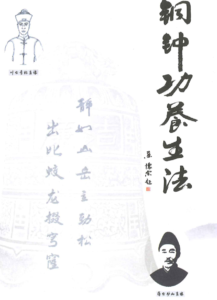
Jiang Youshan (蒋幼山, 1885-1953): The Great Synthesizer
Jiang Youshan (蒋幼山), whose given name was Jiao (矫), was born in Haian, Rui’an. As a weak and sickly child, he began practicing martial arts at age 12 to strengthen himself. At 20, he became a disciple of Chen Chumai (陈楚材), studying Shaolin Neigong for thirteen years. However, his thirst for knowledge was insatiable. Unsatisfied, he sought out Xu Aiqing (徐蔼卿, the disciple of Jia Shiyu) and studied with him for another four or five years, mastering all the secrets of the internal tradition.
In 1924, with great ambition, Jiang Youshan traveled north, settling in Beijing, where he taught and took the opportunity to visit all the famous masters he could. During this time, he was fortunate to receive instruction from Sun Delu (孙德禄, Sūn Délù) , a transmitter of Wudang internal boxing, and to exchange knowledge with the legendary Sun Lutang (孙禄堂, Sūn Lùtáng) , thereby gaining a deep understanding of Taoist internal martial arts. In 1929, he was invited to be a professor of Shaolin Neigong at the Zhejiang Provincial Martial Arts Institute (浙江省国术馆) .
Jiang Youshan dedicated his life to researching and promoting martial arts. He was not only a martial expert but also a man of legendary integrity and courage. In 1941, when Japanese invaders occupied Rui’an, a Japanese officer broke into his home demanding money. When he refused, the officer drew his sword and attacked Jiang, who was over 50 years old. With astonishing calm and mastery, Jiang dodged the blow, and with a gentle but firm movement, disarmed and knocked down the officer. He then effortlessly threw off three more soldiers who came to their superior’s aid and leaped over a wall to escape, demonstrating unparalleled skill and courage.
Jiang Youshan observed that practicing the «Bronze Bell» standing exercise had extraordinary effects on weak and sick people. Therefore, in his teaching, he often required his students to practice this posture for several years before teaching them any forms or sequences. Over time, this fundamental exercise, the «Tong Zhong Jing» (铜钟劲), became independent and began to be transmitted as a system in its own right: the «Tong Zhong Gong» (铜钟功). In 1937, he wrote the manuscript for the book «Introduction to Shaolin Neigong» (少林内功入门), where he systematized the steps and lineage of the «Shaolin Small Circle Internal Art,» leaving a valuable theoretical legacy for future generations.
Dai Junying (戴俊英, ? – c. 1958): The Pioneer of Medical Application
Dai Junying (戴俊英), also known as Abao Laoshi (阿宝老师), began studying with Chen Chumai (陈楚材) in 1903. He deeply mastered the essence of the internal «Soft Art» and was especially skilled in combining the power of the Bronze Bell with massage and acupressure techniques to treat illnesses. In 1926, he began teaching publicly on Huagai Mountain in Wenzhou. In 1931, he founded the «Wenzhou Central Soft Art Research Society» (温州中央柔术研究社) , where he began systematically applying Tong Zhong Gong (then called «Ding Jin Therapy» or «Fixed Exercise Therapy») for medical purposes.
In 1956, the effectiveness of Dai Junying’s medical practices caught the attention of the health department of Zhejiang Province, and he was invited to work as a specialist physician in the Qigong department of the Zhejiang Provincial Hospital of Traditional Chinese Medicine (浙江省中医院) in Hangzhou. During his time at the hospital, he conducted numerous clinical studies that validated the efficacy of Tong Zhong Gong for treating chronic diseases such as neurasthenia, shoulder periarthritis, and stomach ailments. In 1958 and 1959, he published articles in the prestigious Zhejiang Journal of Traditional Chinese Medicine (浙江中医杂志) titled «Practice Methods of Bronze Bell Style Qigong and Their Effects» and clinical summaries. It was he who officially renamed «Ding Jin» as «Tong Zhong Gong» (铜钟功) , bringing this art from popular secret transmission into the realm of modern medical research.
Ma Youzhong (马有忠): The Great Systematizer and Popularizer of the 20th Century
If Dai Junying (戴俊英) was the pioneer who introduced Tong Zhong Gong into the academic medical field, Ma Youzhong (马有忠, Mǎ Yǒuzhōng) was the great systematizer and popularizer who, through his research and editorial work, consolidated the style’s theory and projected it into the contemporary era. His work in the 1980s and 1990s laid the foundation for the modern understanding of this practice.
The Context: Continuity After the Era of Pioneers
After the passing of Jiang Youshan (蒋幼山) in 1953 and the retirement of Dai Junying (戴俊英), Tong Zhong Gong needed a figure who would systematically compile, organize, and disseminate the knowledge. While Dai Junying focused on clinical application in a hospital setting, Ma Youzhong (马有忠) assumed the role of researcher, writer, and institutional organizer, building bridges between the oral tradition and accessible written knowledge.
Research Work and Theoretical Contribution
Ma Youzhong’s (马有忠) most significant milestone in the history of Tong Zhong Gong was his work as an author. In 1986, he published the work «Bronze Bell Qigong» (铜钟气功, Tóng Zhōng Qìgōng) through the Zhejiang Science and Technology Press. This book was not a mere compilation but a work of synthesis that:
- Systematized practice methods: He organized the traditional teachings into a clear and progressive system, making learning more accessible for new generations.
- Explained therapeutic application: He developed the concept of «dialectical exercise methods» (辩证施功法, biàn zhèng shī gōng fǎ), which involves adapting the practice of Tong Zhong Gong according to different health conditions and individual constitutions. This represented an evolution of the clinical work initiated by Dai Junying (戴俊英).
- Unified criteria: His book became a fundamental reference, helping to standardize the transmission of the style and preserve its technical purity at a time of expansion.
Founding the Research Institute
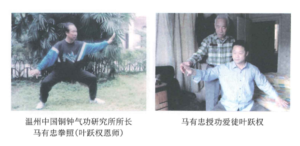
Aware of the need for an institution to provide continuity for Tong Zhong Gong research and teaching, Ma Youzhong (马有忠) founded and directed the Wenzhou·China Bronze Bell Qigong Research Institute (温州·中国铜钟气功研究所, Wēnzhōu Zhōngguó Tóngzhōng Qìgōng Yánjiūsuǒ) . As director and head coach of this institution, his work was crucial for:
- Centralizing teaching: The institute became a reference point for all those interested in learning authentic Tong Zhong Gong.
- Training new instructors: Under his direction, a new generation of qualified teachers was trained to transmit the art with rigor.
- Promoting research: He continued to develop and refine the theories and practice methods, ensuring that Tong Zhong Gong evolved without losing its essence.
His Legacy of Transmission: The Formation of New Masters
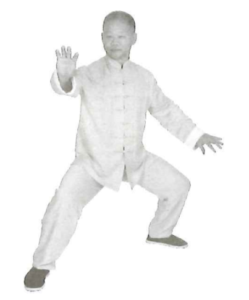
One of the most valuable aspects of Ma Youzhong’s (马有忠) legacy was his generosity in transmission. Research notes mention that he «poured out everything he learned in his life» to his disciples. Among them, the figure of Ye Yuequan (叶跃权, Yè Yuèquán) stands out in a special way.
In 1981, a young Ye Yuequan (叶跃权), who had already begun his journey in Tong Zhong Gong with his father Ye Dilin (叶迪林, Yè Dílín) and the renowned master Chen Wenzheng (陈文征, Chén Wénzhēng), decided to deepen his knowledge and became a disciple of Ma Youzhong (马有忠) . Ma Youzhong (马有忠), recognizing Ye Yuequan’s (叶跃权) dedication and talent, generously transmitted to him the most profound knowledge, especially in the area of dialectical exercise methods (辩证施功法), one of his specialities.
This direct transmission from Ma Youzhong (马有忠) to Ye Yuequan (叶跃权) is of utmost importance because it:
- Guarantees authenticity: Ye Yuequan (叶跃权) received teaching directly from one of the great systematizing masters of the 20th century.
- Transmits specialized knowledge: Training in the dialectical methods allows Ye Yuequan (叶跃权) to understand and teach Tong Zhong Gong not just as an exercise, but as a therapy adapted to each person, thus continuing the medical tradition of the style.
- Connects two eras: Through Ma Youzhong (马有忠), Ye Yuequan’s (叶跃权) lineage connects directly with the systematization and popularization movement of the 80s, which was key to the style’s survival.
Continuity and Development from the 20th Century to the Present Day
Following Jiang Youshan (蒋幼山), Dai Junying (戴俊英), and Ma Youzhong (马有忠), the transmission of Tong Zhong Gong continued to spread like wildfire, with numerous practitioners and masters keeping the flame alive.
- Theoretical Transmission: In addition to Ma Youzhong’s (马有忠) work, another important disciple of Dai Junying (戴俊英), Shou Rusong (寿如松, Shòu Rúsōng) , also published a work titled «Bronze Bell Qigong: Shaolin Small Circle Internal Art.»
- Contemporary Transmitters: In the Wenzhou region, many inheritors continue the tradition quietly but steadily. Among them, the story of your own teacher, Ye Yuequan (叶跃权) , is paramount. After becoming a disciple of Ma Youzhong (马有忠) in 1981, he dedicated himself to the deep study and practice of the art. He serves as a consultant to the Jiang Youshan (蒋幼山) Memorial Hall and has been instrumental in spreading Tong Zhong Gong, not only locally but also to students around the world through modern means, ensuring the lineage remains vibrant and active.
- Protection as Intangible Cultural Heritage and Commemoration: In May 2009, Tong Zhong Gong was officially included in the list of Intangible Cultural Heritage of Wenzhou City. In 2017, it was added to the Wenzhou Martial Arts Association’s register of Intangible Martial Arts Heritage. To honor the memory of the great master Jiang Youshan (蒋幼山), neighbors and enthusiasts raised funds to restore his birthplace, built in 1916, and converted it into the «Master Jiang Youshan Memorial Hall (蒋幼山故居纪念馆, Jiǎng Yòushān Gùjū Jìniàn Guǎn) ,» which opened its doors on January 1, 2021. This space is not only a tribute to history but also an important base for the future transmission of Tong Zhong Gong, with masters like Ye Yuequan (叶跃权) serving as key consultants to guide this mission.